7.19.2011

Pamela: or, Virtue Rewarded

First of all, let me say, thank goodness I got this novel for so cheap at Camelot Books. I would’ve been extremely upset if I’d spent much more than I did. Of the three disliked novels I’ve read recently, I suppose this one is better, not good, but better than the other two. The Expedition of Humphry Clinker still strikes fear into my very soul, I despise that novel with a passion… whereas Joseph Andrews just kind of bored me to the brink of death.


Pamela at least gave me some interesting thoughts to keep me awake. Again, as with Humphry Clinker, it’s written in an epistolary fashion, which can be mind-numbing at best. Here’s the basic gist of the story: Pamela Andrews is a very beautiful 15 year old servant whose mistress has just died, leaving her in the hands of her scoundrel of a son, Mr. B. Immediately Mr. B sets to giving Pamela extravagant gifts, not long after, he begins to test her fortitude by trying to seduce her. A kiss here, a kiss there and before you know it, he’s attempting to ravish the poor (extremely young) virtuous girl.


Here’s where the story sort of gives you something to think about: Pamela is a mere servant girl, however she values herself and her purity. She says “no”, and although she stupidly gets into many of these awkward moments by her own naïveté, it was sort of a big deal to write about a servant girl who valued herself enough to disagree with her master. If you’re like me though, you’ll read her self pitying “O, pray for poor Pamela” letters with an annoyed sigh.


And then there’s the “I want to hit myself on the head with this book lots of times so I’ll forget I just spent time reading over 500 pages of fairly obnoxious whiny letters” moment… ::SPOILER ALERT:: She falls in love with this total cad! What’s the reward for being virtuous? Apparently marrying your would-be rapist. Ick. There were a few other things that just made me roll my eyes when I read about the personality and history of Pamela’s beloved Mr. B. But like I said, of the three novels, this one was the most interesting. It makes you think, even if they are thoughts of “What the heck?!” It’s better than nothing.

Joseph Andrews

Is it possible, have I found yet another novel that I dislike as much as The Expedition of Humphry Clinker? Pretty darn near. Okay, it wasn’t as bad, but it was… dull. Now, I mistakenly read this before reading Pamela (which, for those of you who aren’t familiar with Joseph Andrews, it was written as a follow-up sort of mocking piece in which Henry Fielding attacked the weaker morality points he noticed in Samuel Richardson’s Pamela), which could account for a bit of the dislike, but I’m fairly certain I disliked it for itself.


Another weakly written novel of the picaresque* genre (*a satirical story of a lower class hero or heroine navigating through life and coming upon many adventures), I guess I could cut Fielding some slack since he was merely attempting to parody Richardson, but… Ugh. Adventure is certainly not a word I’d use to describe this novel; it contains a bit of tawdry humor, mysterious parentage and totally unrelated effusive speeches.


Joseph, is introduced as the brother of Pamela Andrews (from the novel Pamela) and is immediately put into a similar circumstance of a very forward master (or in his case, mistress) trying to seduce him. The Lady Booby (yes, that’s really the name Fielding chose) unable to seduce handsome young Joseph sends him away, and thus begins a very tedious novel. I shudder to think about any time the irritating Parson Adams started on a self-righteous sermon-like speech. There's not too much for me to say, I didn't like this one. Glad I'm done with it, check it off the list.


Maybe I’m just too picky, I don’t know. I infinitely prefer the Dickensian picaresque novels to this sort of boredom, but one more down, lots more to go.

7.17.2011

Shakespeare's Sonnets

I’m not going to bore you with a tedious analysis of these sonnets. I’m a firm believer that poetry should be read, felt, enjoyed, experienced… not torn apart or deconstructed, they ought to be left intact (without being dissected) the way the artist intended them to be. Prose should never be used to explain the beauty of a poem.


I love William Shakespeare, and I adore his poetry. His sonnets are marvelous and I can find one to suit any mood or situation from passion to despair, love to loss, it’s all there. Here’s a list of some of my favorites, depending on my moods…


18 – In junior high I memorized this sonnet and performed it at a student expo. Yeah, it’s one of my more embarrassing childhood memories (I don’t want to talk about it.)


Shall I compare thee to a summer's day?
Thou art more lovely and more temperate:
Rough winds do shake the darling buds of May,
And summer's lease hath all too short a date:
Sometime too hot the eye of heaven shines,
And often is his gold complexion dimmed,
And every fair from fair sometime declines,
By chance, or nature's changing course untrimmed:
But thy eternal summer shall not fade,
Nor lose possession of that fair thou ow'st,
Nor shall death brag thou wander'st in his shade,
When in eternal lines to time thou grow'st:
So long as men can breathe, or eyes can see,
So long lives this, and this gives life to thee.


71 – This appeals to my morbid side, it’s painfully beautiful.


No longer mourn for me when I am dead
Than you shall hear the surly sullen bell
Give warning to the world that I am fled
From this vile world, with vilest worms to dwell:
Nay, if you read this line, remember not
The hand that writ it; for I love you so,
That I in your sweet thoughts would be forgot,
If thinking on me then should make you woe.
Oh, if, I say, you look upon this verse
When I perhaps compounded am with clay,
Do not so much as my poor name rehearse;
But let your love even with my life decay;
Lest the wise world should look into your moan,
And mock you with me after I am gone.


116 – This was the sonnet that affirmed my love of Shakespeare when I was a girl. It makes so much more sense once you’ve loved and lost. Thank you, William Shakespeare, for sonnet 116.


Let me not to the marriage of true minds
Admit
impediments. Love is not love
Which alters when it alteration finds,
Or bends with the remover to remove:
O, no! it is an ever-fixèd mark,

That looks on tempests and is never shaken;
It is the star to every wandering bark,
Whose worth's unknown, although his
height be taken.
Love's not Time's fool, though rosy lips and cheeks
Within his bending sickle's compass come,
Love alters not with his brief hours and weeks,
But bears it out even to the edge of doom.
If this be error and upon me proved,
I never writ, nor no man ever loved.


141 – Ah the blindness that takes over when you fall in love, embodied in one amazing sonnet.


In faith, I do not love thee with mine eyes,
For they in thee a thousand errors note;
But 'tis my heart that loves what they despise,
Who, in despite of view, is pleased to dote;
Nor are mine ears with thy tongue's tune delighted;
Nor tender feeling, to base touches prone,
Nor taste, nor smell, desire to be invited
To any sensual feast with thee alone:
But my five wits nor my five senses can
Dissuade one foolish heart from serving thee,
Who leaves unswayed the likeness of a man,
Thy proud heart's slave and vassal wretch to be:
Only my plague thus far I count my gain,
That she that makes me sin awards me pain.


145 – I love the fear that Shakespeare lays open in this sonnet, it’s human and familiar.


Those lips that Love's own hand did make
Breathed forth the sound that said, "I hate,"
To me that languished for her sake:
But when she saw my woeful state,
Straight in her heart did mercy come,
Chiding that tongue, that ever sweet
Was used in giving gentle doom;
And taught it thus anew to greet;
"I hate," she altered with an end,
That followed it as gentle day
Doth follow night, who, like a fiend,
From heaven to hell is flown away;
"I hate," from hate away she threw,
And saved my life, saying- "not you."

7.15.2011

The Way of the World

I’m one of those people who loves reading plays… that being said, I suppose I should qualify that statement: I love reading most plays. This wasn’t the worst thing I’ve ever read ::ahem Humphry Clinker:: but it was far from dazzlingly wonderful. It’s a fair choice for a play from the Restoration comedy genre; I kind of had a geek moment when Congreve mentioned Ben Johnson’s Volpone… That was honestly the high point for me.


To be fair, I’ll share a short synopsis, maybe you’d like to read the play for yourself. Like I said, it isn’t terrible; I’m just not generally partial to the Restoration comedies. The story centers on the lovers Mirabell (yes, Mirabell is a man) and Mrs. Millamant who love each other and want to marry. Alas, impediments exist! If Millamant’s aunt, Lady Wishfort marries someone, they will lose £6000 of Millamant’s dowry… Marriage is a possibility when a rich lady is in question. Lady Wishfort would rather her niece marry her nephew Sir Wilful and of course there are also the added complications of former lovers and mistaken identities, all characteristic of the basic Restoration comedy. It’s short, you can read it in no time, and maybe you’ll like it more than I did. Hey, I bought my Dover Thrift Edition from Barnes & Noble for only $1.00!

6.20.2011

Ulysses

“If the accused could speak he could a tale unfold one of the strangest that have ever been narrated between the covers of a book.” James Joyce’s Ulysses has been accused of being unreadable and obscene; and its history is far from sedate. For a while it had been banned in the UK and the United States because of its unabashed and sometimes explicit descriptions (and choice of language).


Make no mistake, reading Ulysses is a huge undertaking but it’s something I think every serious fan of literature should undertake at some point (side note, since it’s based on Homer’s Odyssey, it’s doubly interesting if you’ve ever read the original… though it probably won’t really help to understand some of Joyce’s truly enigmatic phrases and slang).


I finished Ulysses on Bloomsday! Unintentionally, I assure you, I got so caught up reading it I read through the whole night of June 15th to the morning of June 16th. When I realized what day I finished reading Ulysses, I geeked out. There are almost no words I can use to explain how incredibly epic this novel is; you just need to read it to understand what I mean. Don’t be intimidated, pick it up, read it. Here are some quotes I either found amusing/insightful/funny/or a complete epitome of Ulysses …


Pain, that was not yet the pain of love fretted his heart.


Where was the chap I saw in that picture somewhere? Ah, in the dead sea, floating on his back, reading a book with a parasol open. Couldn’t sink if you tried: so thick with salt. Because the weight of the water, no, the weight of the body in the water is equal to the weight of the. Or is it the volume is equal of the weight? It’s a law something like that. Vance in High school cracking his fingerjoints, teaching. The college curriculum. Cracking curriculum. What is weight really when you say the weight? Thirtytwo feet per second, per second. Law of falling bodies: per second, per second. They all fall to the ground. The earth. It’s the force of gravity of the earth is the weight.


The first fellow that picked an herb to cure himself had a bit of pluck.


She swore to him as they mingled the salt streams of their tears that she would cherish his memory, that she would never forget her hero boy who went to his death with a song on his lips as if he were but going to a hurling match in Clonturk park.


On the other hand what incensed him more inwardly was the blatant jokes of the cabmen and so on, who passed it all off as a jest, laughing immoderately, pretending to understand everything, the why and the wherefore, and in reality not knowing their own minds… (Fun trivia: Brendan Fehr’s character in Roswell quotes a version of this fantastic line in the episode 285 South)


theres nothing else its all very fine for them but as for being a woman as soon as youre old they might as well throw you out in the bottom of the ash pit.

6.16.2011

Reading Journal for Book Lovers


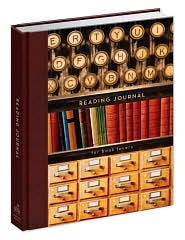
In my rambles through the sweet little book shops of Solvang a couple months ago; I picked up one of the most useful items I’ve ever beheld: A Reading Journal For Book Lovers. Yes, yes… I’m aware that I’m a total geek, but really, how practical for an avid reader! First off, I adore the cover design, but then you open it up and it’s equally impressive inside too.


The inside of the journal contains pages to analyze any books you’ve finished, little prompts about your personal reading preferences and numerous reading lists (i.e. BBC Top 100 Reads*, Pulitzer Prize Winners, Time Magazine: Top 100 Novels etc). Most of the pages consist of your own personal book rating system with areas to write the title, author, date published, genre, date you started/finished, your rating out of 5 stars, what the book inspired you to learn about and a whole page for notes.


Seriously, for like $13.00 you can grab this super cute reading journal, I think I’ll probably buy several more of these, just to keep myself well stocked for future reading endeavors.


*Side note… Has anyone noticed that the BBC’s top 100 list includes a strange Harry Potter book? (I myself, never having read a Harry Potter book find it ludicrous that they would be included amongst true classics such as Pride & Prejudice, David Copperfield, Middlemarch and Wuthering Heights but that’s not my point…) My point is, if you’ll check the list, number 22 is written as “Harry Potter and the Philosopher’s Stone”. As I said, I don’t know Harry Potter stuff, but I do know Van Morrison, and I know for a fact that good old Van released an album about 13 years ago called “Philosopher’s Stone”… I’m pretty sure Harry Potter has more to do with sorcerers than philosophers. Am I way wrong here? I did a search on bn.com and found H.P. and the Philosopher’s Stone… But it’s in Greek, that doesn’t count and I doubt it would have been included in the BBC’s Top 100 list. I dunno, it just seems strange.

6.10.2011

The Dream of the Rood

Where can I begin with this poem? It’s stunning. It won’t take any time to read, but oh my goodness, it’ll probably get you started on some serious thinking. I read this poem a few weeks ago with every intention of writing about it then, but it’s taken me this long to find any words about it.


The Dream of the Rood is a fine example of Middle English poetry, though the exact date of the poem’s authorship is still unknown. Perhaps that adds to the wonderful mystery of it all.


At any rate, you may wonder, what is a ‘Rood’? Ah, glad you asked. Rood is a Middle English word for ‘rod’, which was also a word used for a crucifix. Maybe the title makes you wonder: is this the cross dreaming, or is someone dreaming of the cross and then writing the poem (think about the title, it’s still unclear… the only answer is to read on and find out).


The poem is indeed a dream about the cross of Jesus and its experiences and viewpoint during Jesus’ crucifixion. Whoa, what an incredible idea, the use of the inanimate object to tell the story of Jesus’ crucifixion. It’s interesting, all of the Easter church services I’ve been to in my life; I’ve never heard anything so abstract that made so much sense. The idea of a cross or tree speaking puts me in mind of one of my favorite Bible verses… check out 1 Chronicles 16:33.


I realize this isn’t my usual type of post, that’s simply because there’s almost nothing I can say. Read it, and you’ll see what I mean.

6.09.2011

Howards End

It may be apparent to any readers that my all time favorite author is the great Charles Dickens. I love the way he details scenery, his character’s appearance and his descriptions can go on for pages… E.M. Forster is quite the reverse, yet I love his writing style as well. Forster seems to focus less on outward appearances and much more on the psychological side of things, internal thoughts and repressed feelings. The brilliance of Forster’s novel lies in its understated nature blended with well balanced intrigues, hopes and tragedies.


Any Jane Austen fans may note slight similarities between Sense and Sensibility’s Dashwood sisters and the Schlegel sisters of Howards End… Check it out and see what you think, it’s certainly a splendid novel.

6.08.2011

The Canterbury Tales


Geoffrey Chaucer was certainly modern, considering he was an author who wrote it in the late 14th century. Maybe Canterbury Tales goes to show that despite how different it may look, society hasn’t changed that much. The chivalry (although seemingly nonexistent nowadays) still makes sense and isn’t unbelievable or too archaic, the humor seems like it was plucked out of a sitcom (though, I suppose considering time lines, it would be the other way round) and the quickness of the poetry is refreshing and not at all stilted. My favorite section was of course, The Knight’s Tale. Was this the best thing I’ve ever read in my whole life? Not quite. Am I glad I read it? Absolutely.


If you’ve not read The Canterbury Tales and you enjoy classics, check it out, it’ll take just a little while to read, and you’ll probably be pleasantly surprised!

5.31.2011

Tess of the d'Urbervilles


How have I, a classic literature lover, gone so many years without reading this novel? This is what happens when you stick to what you know and only read the same authors and novels over and over; you miss out on some fantastic books!


I am still in awe of this novel, Thomas Hardy's writing style is so effortless to read, I found myself swept up and immersed in the story completely. It was so amazing; I finished this book in a day. Naturally with such an intense story, I felt exhausted afterwards but I have a new favorite novel to add to the list.


Tess Durbeyfield is such an amazing character, I was instantly enamored. Hardy combined such a mixture of strength and innocence, determination and independence that such a literary heroine is rarely found. Alec d’Urberville is sickening while Angel Clare seems diametrically opposite… However, if you take a closer look, you’ll notice one form of abuse hits Tess just as hard as the other. Early on in the story, Alec violates Tess an obvious form of abuse, then later Angel’s disgust at being deceived leads him to believe in an unfair double standard, and again Tess is the victim of a subtler abuse.


Hardy’s commentary on Victorian England’s double standard placed on women in view of their purity is stunning. Seriously, if you haven’t read this novel, do it, it’s fantastic.

5.30.2011

Daniel Deronda

I'm back. I've still been reading, just slacking in the blogging department, which, let's be honest: isn't of much consequence. At any rate though, I've had a few people tell me I've gotten them interested in classic literature, score! Up next, George Eliot's splendid Daniel Deronda.


There's so much to be said about this novel, but I'll just touch on a few important points. Instead of making Daniel an impetuous youth, Eliot introduces a deep thinking, strong principled, handsome Englishman. Also immediately introduced is the exasperatingly spoiled yet beautiful Gwendolen Harleth.


Now, although Gwendolen is presented as a potential heroine who can become a better person, you’ll find yourself hoping desperately for a more worthy woman for dear Daniel. Enter Mirah Lapidoth. Mirroring Daniel in many aspects, she adds a touch of pathos and innocent sweetness to the love triangle.


But don’t be fooled, Daniel Deronda isn’t merely a romantic novel, George Eliot used her beautiful story as a way of conveying her frustration with English prejudices which focused strongly on the Jewish faith and culture. At a time when many English authors penned stories which included terrifying Jewish characters, Eliot saw the injustices and strove to correct people’s misconceptions. As much as I love Charles Dickens, think about the seedy, horrific Fagin of Oliver Twist (which it seems he tried to right with Riah’s character in Our Mutual Friend)… So, in George Eliot’s true brilliant fashion, she attacks social injustice while writing one of the most impressive love stories.


As a side note, the 2002 BBC film version of Daniel Deronda is certanly worth a watch.


Here are a few great quotes:


“No- no- it shall not be. It may be- it shall be better with me because I have known you.”


And while there is warmth enough in the sun to feed an energetic life, there will still be men to feel, ‘I am lord of this moment’s change, and will charge it with my soul.’


I know very well what love makes of men and women – it is subjection.


Yet when Deronda entered, the sight of him was like the clearness after rain: no clouds to come hinder the cherishing beam of that moment.


Among the blessings of love there is hardly one more exquisite than the sense that in uniting the beloved life to ours we can watch over its happiness, bring comfort where hardship was, and over memories of privation and suffering open the sweetest fountains of joy.

4.12.2011

The Bryan Stow Fund


If you know me at all, you know I love the Dodgers with a passion. I was brought up listening to Vin Scully, Tommy Lasorda was one of my childhood heroes, and dad told me stories about the great Sandy Koufax, Jackie Robinson, Pee Wee Reese and countless others... All my life I've adored my team, which makes the recent tragedy hit home so much harder.


What can you say when some gutless thugs mercilessly beat a man simply for liking the other team? Yes, there's a heated rivalry between the Dodgers and the Giants; but in the end, it comes down to basic human decency and respect. Please, let's not continue this vicious cycle. I've been hit and had things thrown at me for visiting Angels stadium while wearing Dodgers gear, violence is not unique to one team's fans... But if you're a true lover of the great game of baseball, please respect others.


If you can, donate some money to the Bryan Stow Fund. You can go directly from a PayPal account by clicking on the Send Money option then going to Personal: Gift and sending the donation to stowdonations@gmail.com.


"There's no room in the game for hatred and violence. This is America's national pastime, let's keep it that way." -Jamey Carroll

4.08.2011

The Book Loft, Solvang, CA


The last store in my ramblings through the little town of Solvang was The Book Loft. It's unique in every sense of the word: embodying a Barnes & Noble-esque downstairs, a lovely used and rare section upstairs, the Hans Christian Andersen museum and the cozy little Bulldog Cafe.


Don't panic, I say Barnes & Noble merely because the downstairs is comprised entirely of new books. It's still a used bookstore at heart. Of course, I milled about downstairs and marvelled at the Authors Playing Cards (an item I fully intended to create myself), journals, puzzles, games etc... But the piece de resistance is upstairs. It contains a fabulous American/Military history section, a bit of poetry, a wall of fiction, cases of rare books and the lovely museum dedicated to one of my favorite authors.


As I wandered among the many shelves, one of the employees noticed my epic reading list and asked if he could help me find what I was looking for. Now although they didn't have the incredibly obscure book, he hopped online and found a copy he could order and ship to me. Now that's service! Go. Wander. Enjoy.


If you visit, here's a little tip: the stairs leading to the used section has a long bookshelf built into it... It has beautiful classics and poetry books for great prices!